-
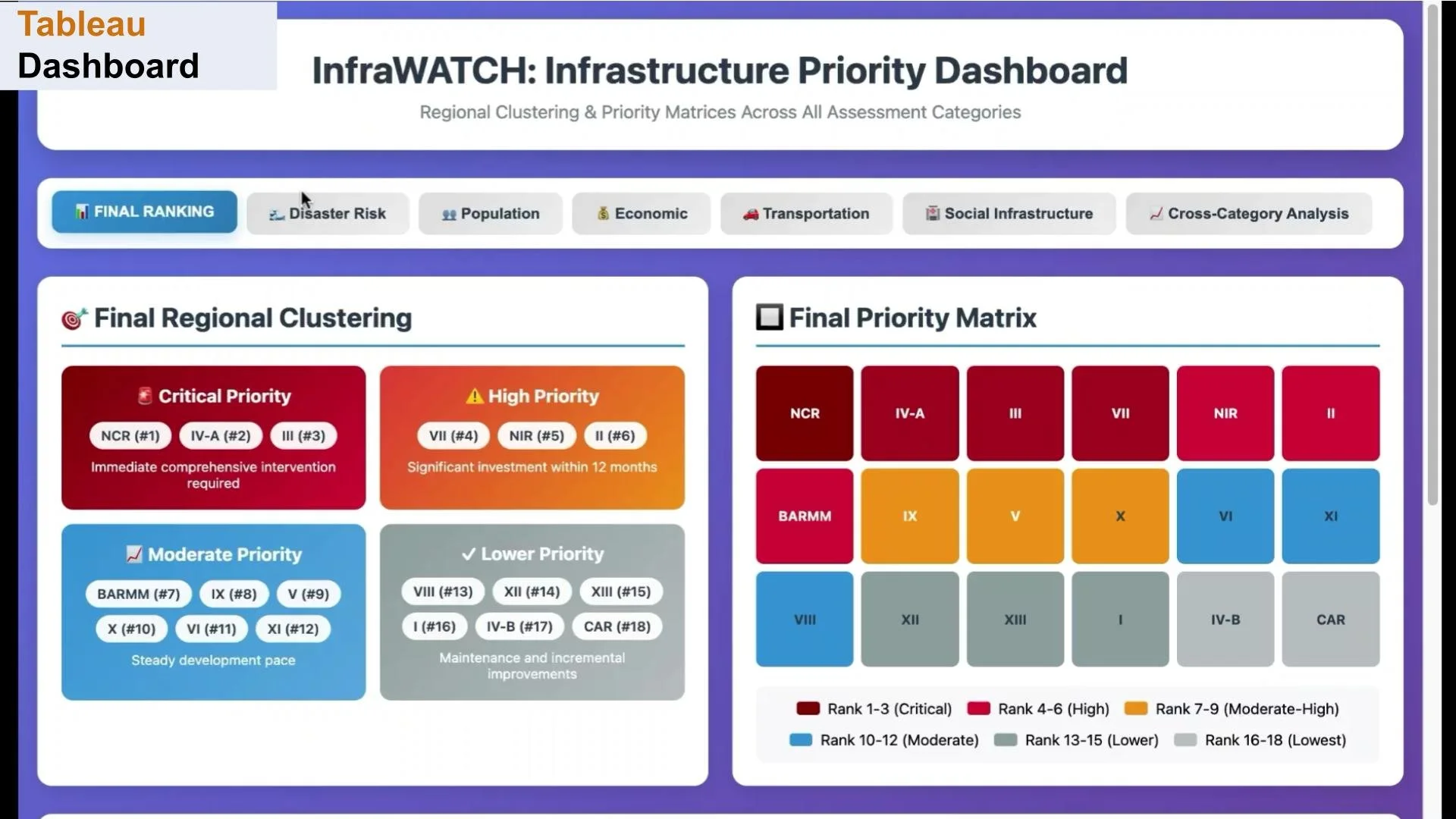
INFRA PROJECTS PRIORITIZATION
InfraWatch: Building Tomorrow's Infrastructure Today
To help the government trim down the projects to those that need to be prioritized and reduce exposure to corruption, where are infrastructure projects badly needed to support growing population and accelerated development in cities?
One of our Batch 11 capstone groups tackled this coordination challenge head-on. InfraWatch demonstrates how modern data engineering can break down these silos—integrating datasets from seven government agencies into a single, powerful analytics system.
-
DISASTER PREPAREDNESS RESOURCE ALLOCATION
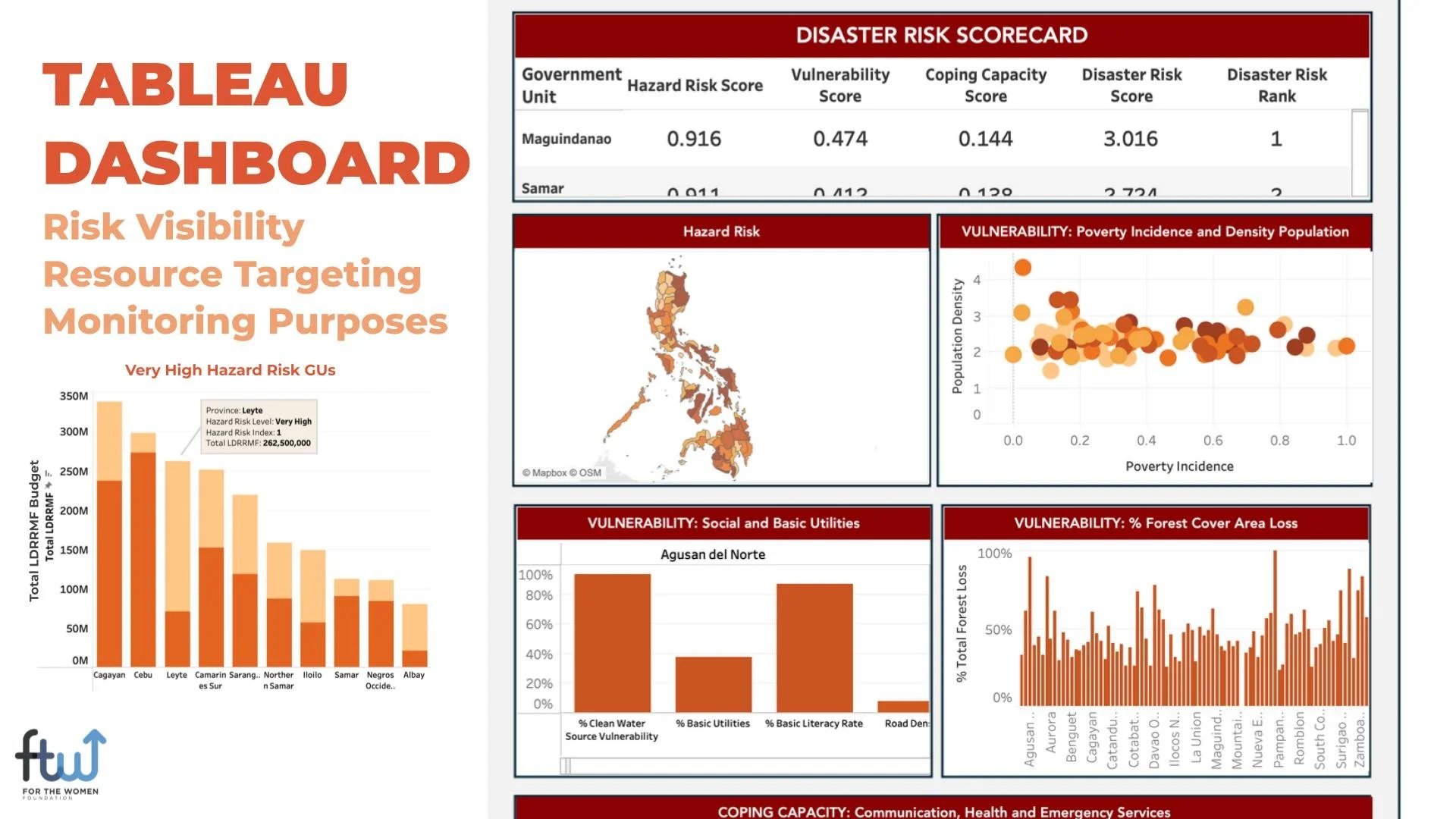
From Reactive to Resilient: Transforming Disaster Preparedness in the Philippines
For LGUs to better prepare for climate-related disasters, how can they better allocate budget and other resources for disaster risk management? One of the Batch 11 capstone groups asked: What if we allocated disaster funds based on actual need instead of provincial wealth?
They built a comprehensive risk-based budgeting framework that integrates climate science, demographic vulnerability, infrastructure gaps, and fund utilization patterns across all 82 Philippine provinces.
-
VOTER EDUCATION SEGMENTATION
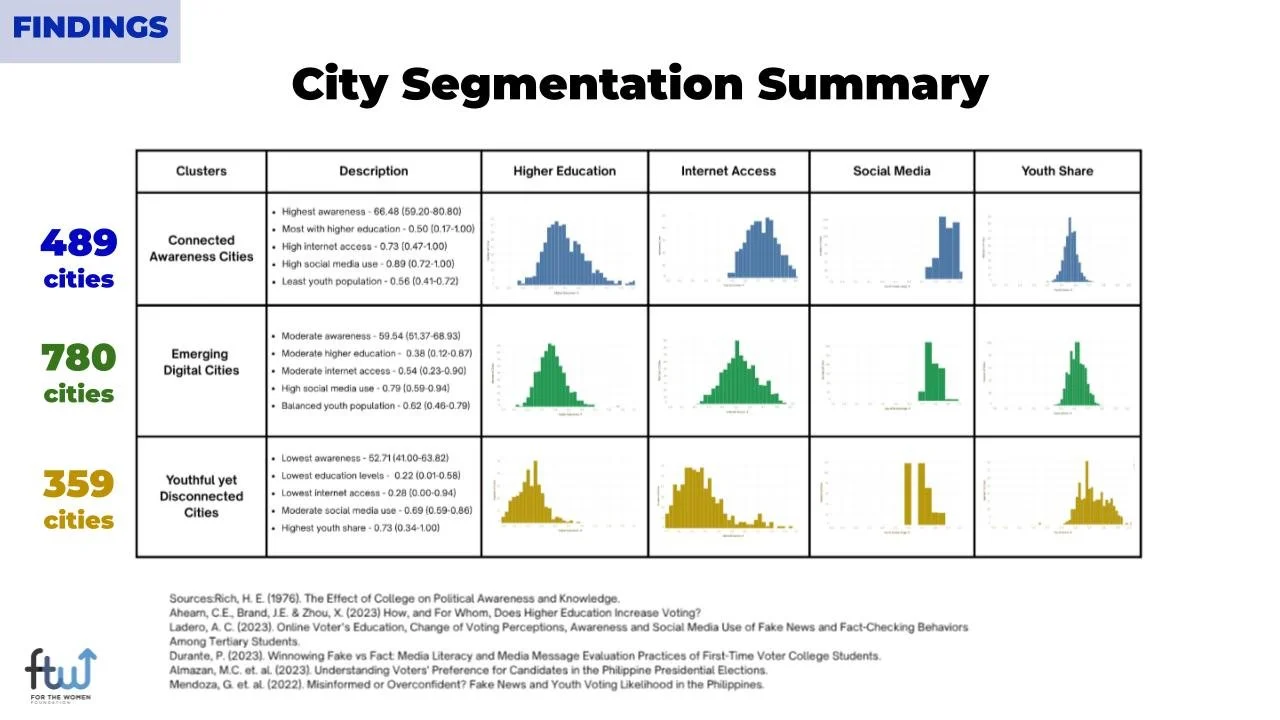
Behind the Numbers: Mapping Filipino Voter Awareness and Education
The last national presidential elections showed a younger voter demographic, assumed to be more digital-savvy. While we cannot say that they made the right decisions, this segment is assumed to have better access to information. How can we ensure proper voter education for all segments?
One of our Batch 11 capstone groups tackled this critical democratic challenge head-on. By analyzing voter registration data, census records, digital connectivity patterns, and educational attainment across all 1,628 Philippine cities, they mapped voter awareness gaps and identified three distinct voter segments.
-
4PS COMPLEMENT ANALYSIS
Uneven Progress: Why 4Ps Works Differently Across the Philippines
Poverty drivers need local context. With 4Ps program more effective in some provinces and regions than others, how can we complement the program better with tailor fit interventions per province or region?
Some regions show strong improvements. Others struggle despite having large numbers of beneficiaries and equivalent cash transfers. Why?
One of our Batch 11 capstone groups asked: If 4Ps provides the same support everywhere, why does impact vary so much by region—and what can we do about it?
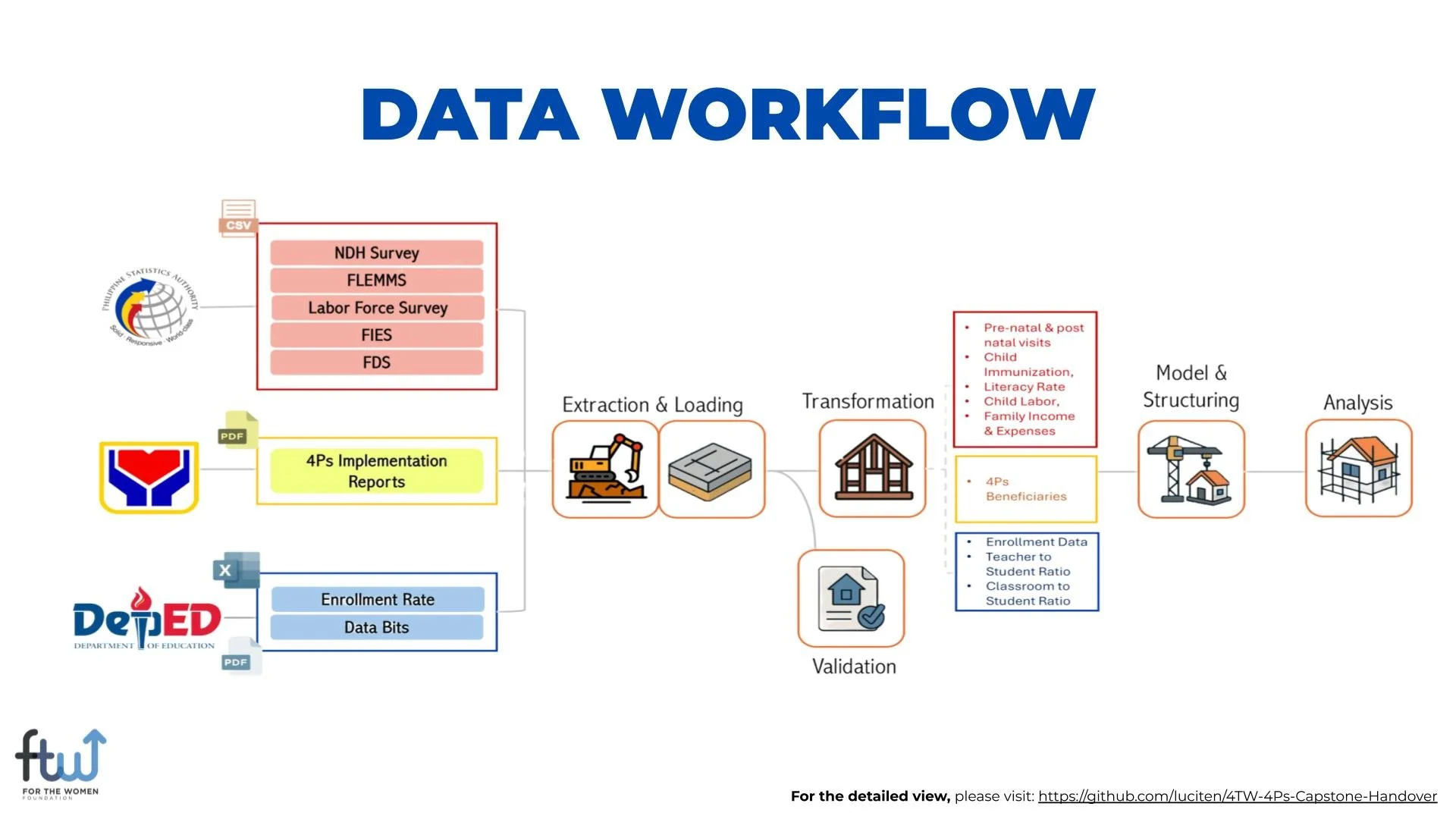
They built a comprehensive regional diagnostic system analyzing 4Ps outcomes across four critical dimensions.
-
WOMEN’S CAREER VS. HEALTH
Bridging Women's Career and Health: A Data-Driven View of Filipino Working Women's Well-being
More and more Filipino women are becoming managers from 48-50% of local companies. Compared to other Southeast Asian countries, this is high, but is the Philippines taking care of them enough? What improvements in female health services need to happen?
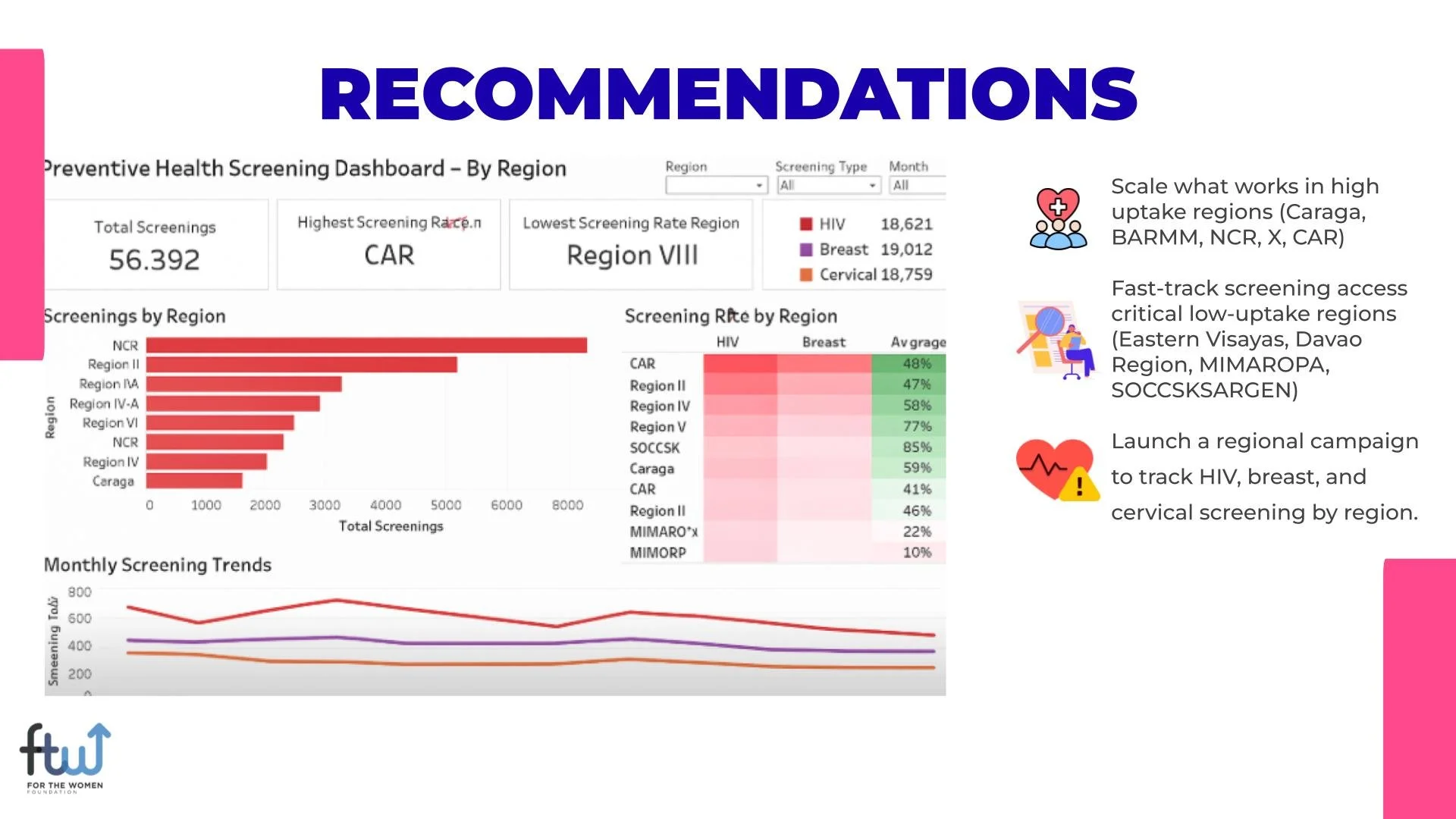
Leadership gains mean nothing if they're unsustainable. And the data reveals troubling patterns: while women advance professionally, their access to preventive health services lags dangerously behind. The result is a fragile progress—women reaching management positions while facing undetected health risks that could derail their careers and lives.
This capstone project asks: How do women's health and empowerment affect their workforce status and career advancement—and what does this mean for sustaining the Philippines' leadership in gender equity?